Faith, Love, Forced Migration, and our Sunday Best: Black Livin' in America
By Steffan Spencer

Dr. Steffan A. Spencer, Assistant Professor of African History at the University of Minnesota Duluth with both MA and PhD degrees with distinction from Howard University in African History, visited the Walker’s Ruben/Bentson Moving Image Collection throughout the winter in 2019 and early 2020. To engage with Spencer as a public historian, we invited him to guest curate a program of his choosing. At that time, Dr. Spencer was invited to write the following article to give his perspective on his selections for the program, including two recent local works, and their themes. Originally planned as an on-site presentation, Black Living: Jazz, Gentrification, and Get’n By was rescheduled and reformatted as an online program this September 8-22 with a live Zoom conversation with local filmmakers Bianca Rhodes and E.G. Bailey.
As a historian of Africa and her diaspora, I selected works from the Bentson Film Archive that would convey some of the everyday realities of Black people, free of the distortions of the early film and media industries that are still echoed today. What I immediately noticed in the selections was a consistent theme of lyricism that serves as a hallmark of Black life in America—a creative response to the daily struggles of simply existing, simply living, especially while facing the ever-present threat of forced displacement from one’s community and home. This raises the question of how to create a sustainable life for one’s family in the face of aggressive, unrelenting gentrification?
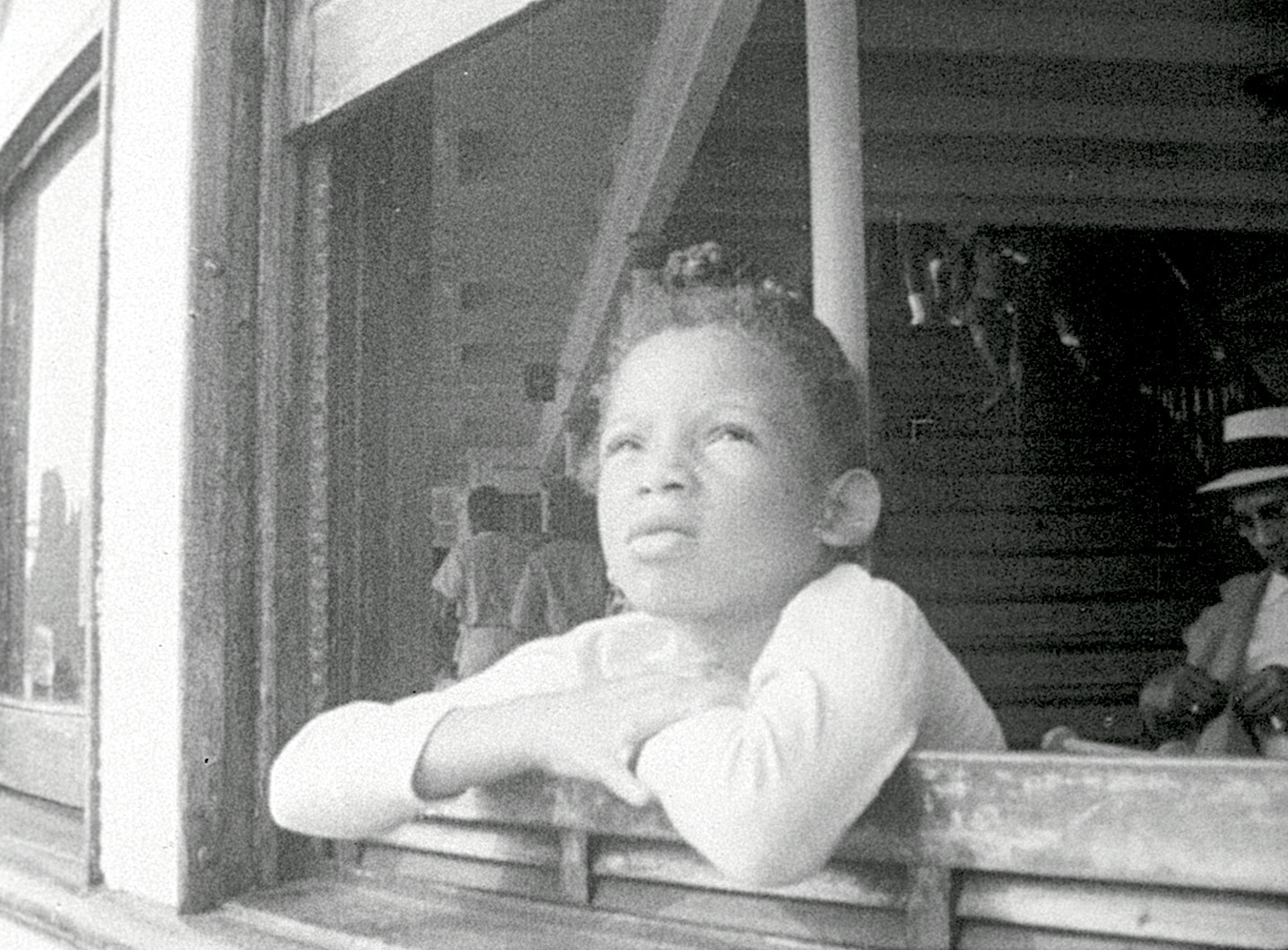
Ken Resnick and Gordon Hitchens, Sunday on the River, 1960. Photo courtesy of Walker Art Center
Ken Resnick and Gordon Hitchens’s documentary short, Sunday on the River (1960), explores African American life on a leisurely Sunday afternoon in Harlem. The work displays the complex and underrepresented lives of African Americans rarely seen in film during this time. The black-and-white film is accompanied by a moody soundtrack consisting of spirituals sung while families go about their everyday lives: children playing in their neighborhood, ice cones being hand shaven as doves fly through the sky. Families walk through Harlem to take the ferry, ride along the Hudson River, and eventually sail past the docks, arriving at a park after church service wearing their Sunday best. The youth enjoy their patty-cake games, elders hold gentle conversations, friends dance while loved ones break bread together. Humanizing and melodic, Sunday on the River illustrates the ease and beauty of everyday life undisturbed, uninterrupted, and unbothered.
Music from the Edge of the Allegheny Plateau by Kevin Jerome Everson (2018), conveys a casual everyday creativity, opening silently as an experimental short film with a home-video feel, showing two gentlemen preparing to share their song from their family’s living room, as though entertaining a welcomed guest. The scene suddenly cuts to a young rapper, seemingly floating down the streets, sharing his art as the leaves of trees drift overhead. The gentlemen, a singer and piano player, return to perform their song. Everson presents, on the streets and in their homes, generations of African Americans from this Mansfield, Ohio community sharing their talents and their message of faith through music, gesture and lyricism. 2
Rondo: Beyond the Pavement (2018), a student-produced documentary guided by the able hands of Bianca Rhodes, chronicles the history of a thriving African American neighborhood torn in twain by the I-94 highway in the heart of St. Paul. The film interviews several residents and former residents of the community who vividly describe the vitality of the businesses and families living in the Rondo neighborhood: Tiger Jack’s Candy Store, the legendary Penumbra Theatre, and Rondo Day Celebrations where dancers, drummers, and marching bands enlivened their community, before the construction of the interstate. The archival work of the film reveals the plans and letters detailing the deliberate routing of the highway through Rondo while viable alternative routes were ignored. Additionally, the maps and aerial images of the construction of I-94, coupled with the interviews of residents who watched as bulldozers rolled in and their earth was moved, is especially compelling. The chill of families waking up to wrecking balls hanging menacingly over their homes is visceral. Most importantly, however, as the residents themselves describe, is the living legacy of Rondo which, though separated by a highway, endures through the youth and neighbors who remain until today.
Finally, E.G. Bailey’s music video/short film, I Love by Truthmaze (2020), depicts the artistic perseverance of the Black community shortly after the tumult of the George Floyd murder and the ensuing world-wide protests. A hip-hop narrative following two young men going about their everyday, with aerial footage of beloved locales, street art, the community and a pronounced 3 affection for the Twin Cities. The film concludes by situating itself within the Black Lives Matter Movement, with a list of names, lives taken too soon, a list overwhelming to behold. All of these works convey an innate knowledge around the nation, of the struggle to creatively respond to gentrification and red-lining, a type of forced migration, with dignity, poise and lyric—a creativity which is still required of us, as evident in the affairs of the day.
