Building and Campus
Architecture, landscape, and contemporary art come together across galleries, theaters, and outdoor spaces at the Walker Art Center.

One of the most celebrated art museums in the country, the Walker Art Center is known for its innovative presentations and acclaimed collections of contemporary art across the spectrum of the visual, performing, and media arts. Over the course of more than 100 years, the Walker has evolved from a privately held collection into an internationally recognized institution and civic resource. Founded in 1879 by lumber baron Thomas Barlow Walker, the Walker was established at its current location in 1927. Edward Larrabee Barnes’ award-winning building opened in 1971 and was expanded in 1984. The addition of a pioneering urban sculpture garden in 1988, and its subsequent expansion in 1992, created a new civic landmark for the Twin Cities. In 2005, the Walker opened an expanded building and greenspace designed by Herzog & de Meuron that, combined with the adjacent Minneapolis Sculpture Garden, forms a 17-acre campus.
The Walker sits at the edge of downtown Minneapolis, nestled between a vibrant urban core and historic residential neighborhoods, its campus connected to the city’s renowned system of parks and lakes. The expanded facility nearly doubled the size of the Walker and features new galleries and education areas; a new 385-seat theater; street-level and roof-top terraces; plazas, gardens, and lounges; and increased services and amenities for visitors. The Minneapolis Sculpture Garden, a project of the Walker Art Center and the Minneapolis Park & Recreation Board, is adjacent to the museum. More than 6.5 million people have toured the 11-acre site, which is filled with some 40 works of contemporary art.
Architectural Features

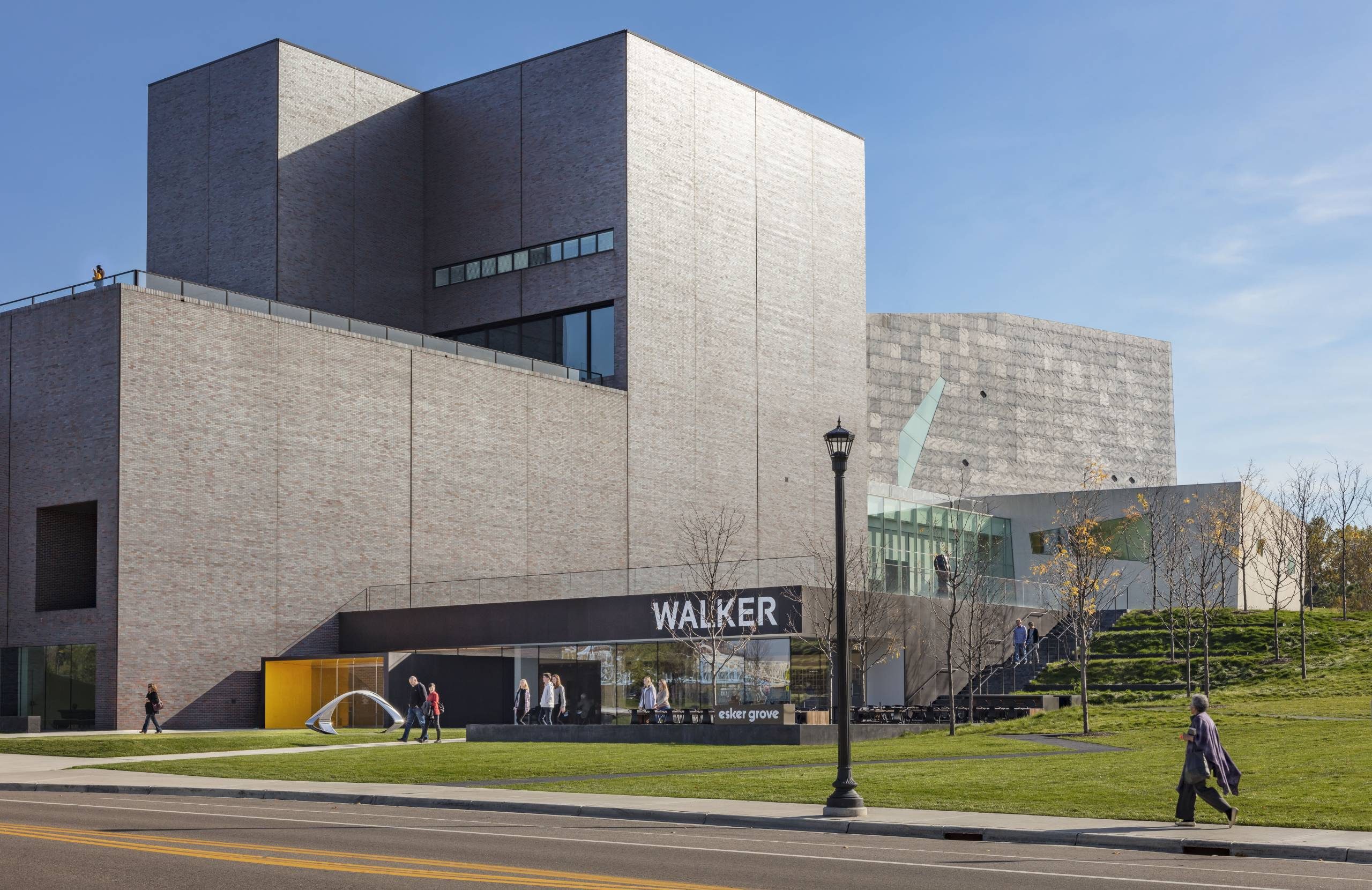
The distinctive Edward Larrabee Barnes-designed tower, which opened in 1971, is clad in a brown, plum-spotted brick. Like a rectangular helix, its seven boxlike galleries radiate from a central circulation core. Inside, Barnes iconic design with its white walls, terrazzo floors, and loftlike spaces replicated the white cube galleries that have become the presentation hallmarks of modern and contemporary art. The large columnless and spacious galleries vary in volume from 2,300 to 11,000 square feet with ceiling heights as high as 17.5 feet. Three outdoor terraces, dubbed “pedestals” by Barnes, showcase rotating sculpture displays by such artists as Sol LeWitt, Claes Oldenburg, and Alexander Calder. Barnes won an American Institute of Architects Award for “perhaps the finest building for the display of contemporary art built in the last generation,” as described by the New York Times.
In 1999, the Walker engaged the Pritzker Prize–winning Swiss architectural firm of Herzog & de Meuron to develop a master plan and design for an expanded facility. The vision was to create not only additional galleries to display the institution’s growing collections, but also new spaces, such as a theater to house and present performances. Linking directly to the original Barnes building, their concept also included a number of gathering places where visitors could converge for chance encounters with new people, ideas, and art forms.
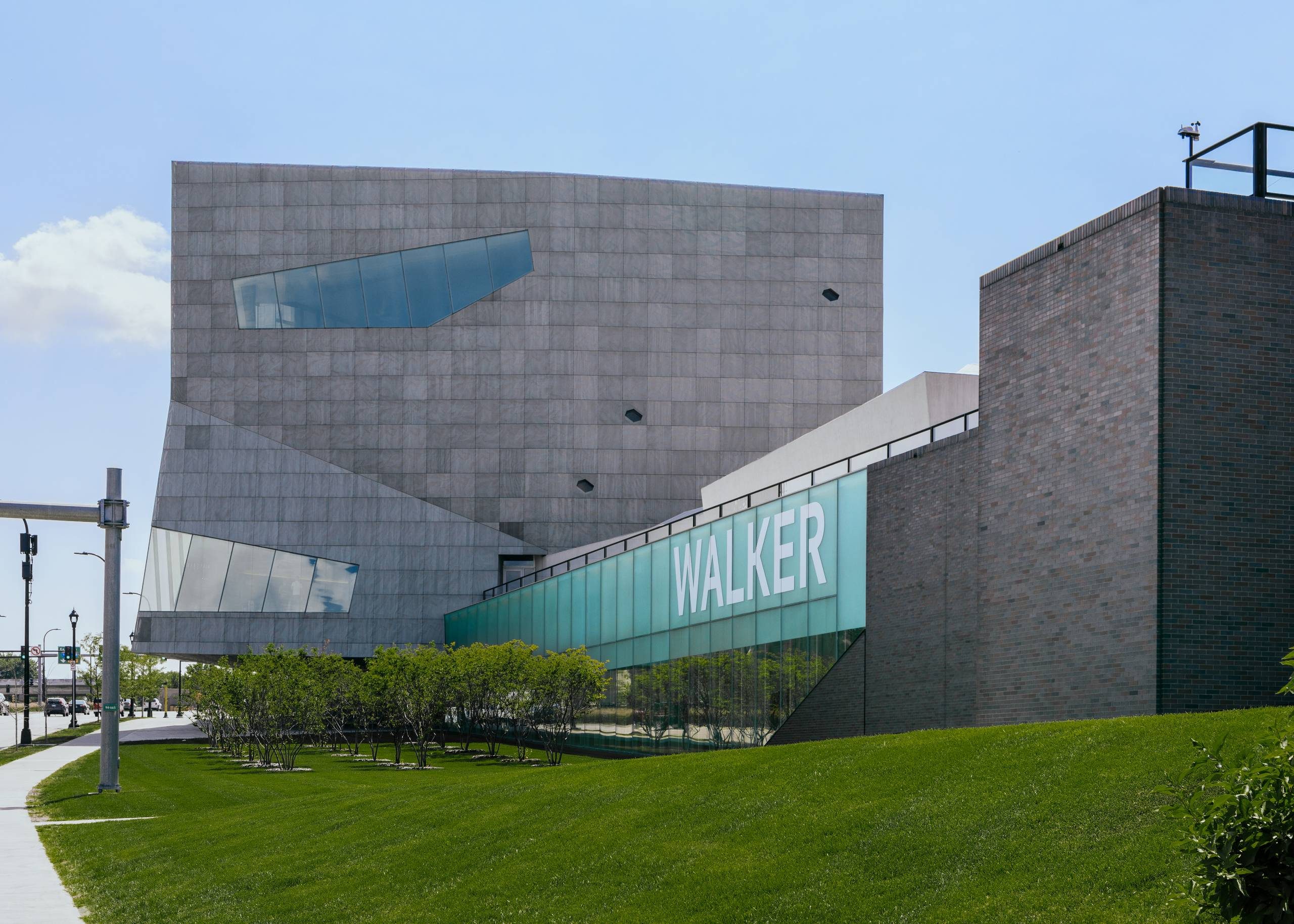
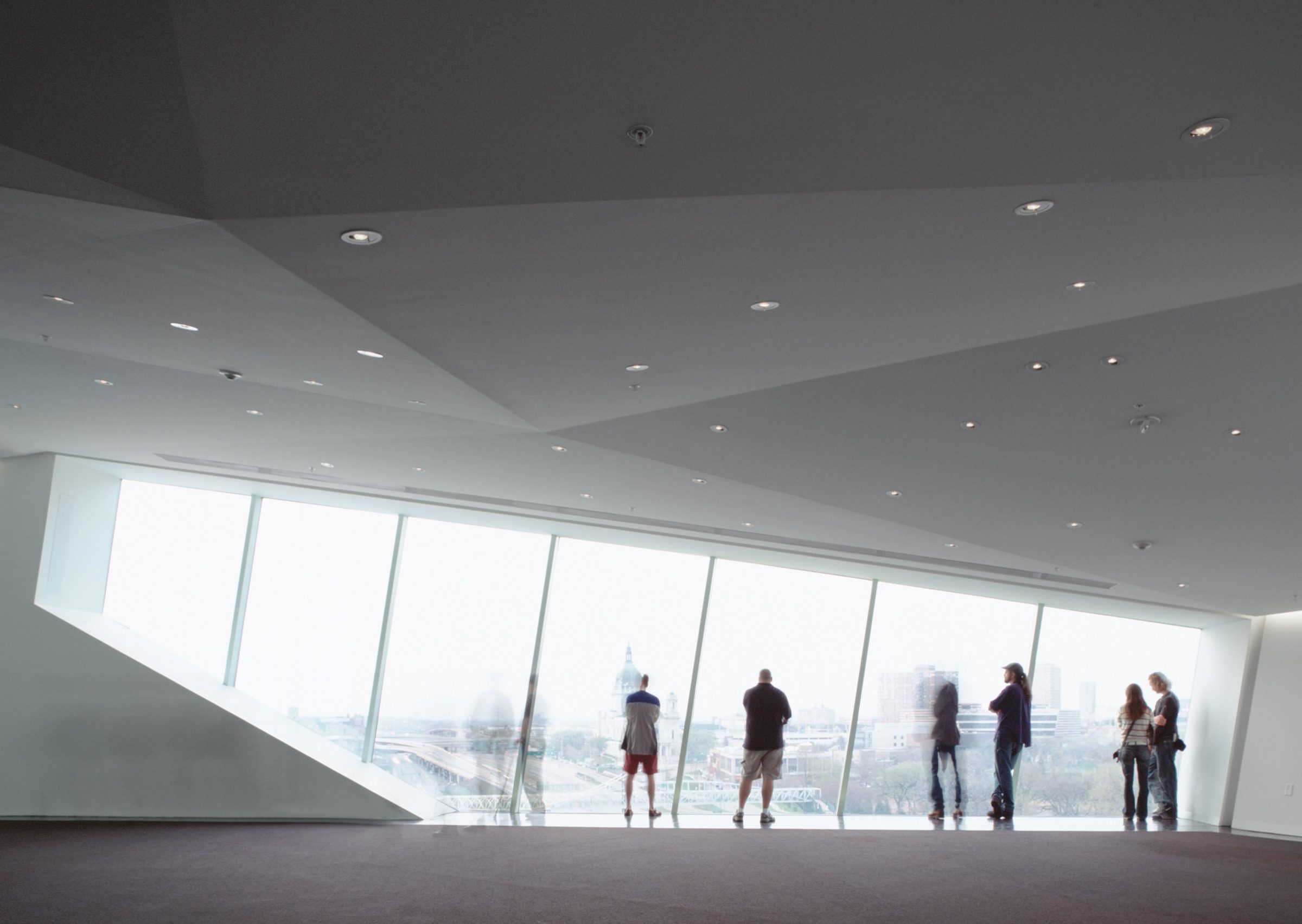
Herzog & de Meuron’s expansion consists of two parts: a cubic tower and a long, glass-walled, horizontal link to the Barnes building. A deliberate reference to the vertical massing of the Barnes building, the shimmering silver tower contains the William and Nadine McGuire Theater, the Skyline Room special events space, the museum shop, and a fine dining restaurant and bar. Its façade is wrapped in aluminium-mesh panels that have been folded and stamped with a pattern of creases. The textural effect has been likened to a crumpled piece of paper, crinkled fabric, or the fractured surface of a frozen lake, suggesting fragility in spite of its great mass. It is cantilevered over the plaza below, offering diners in the restaurant a dramatic view of the avenue and downtown Minneapolis skyline.

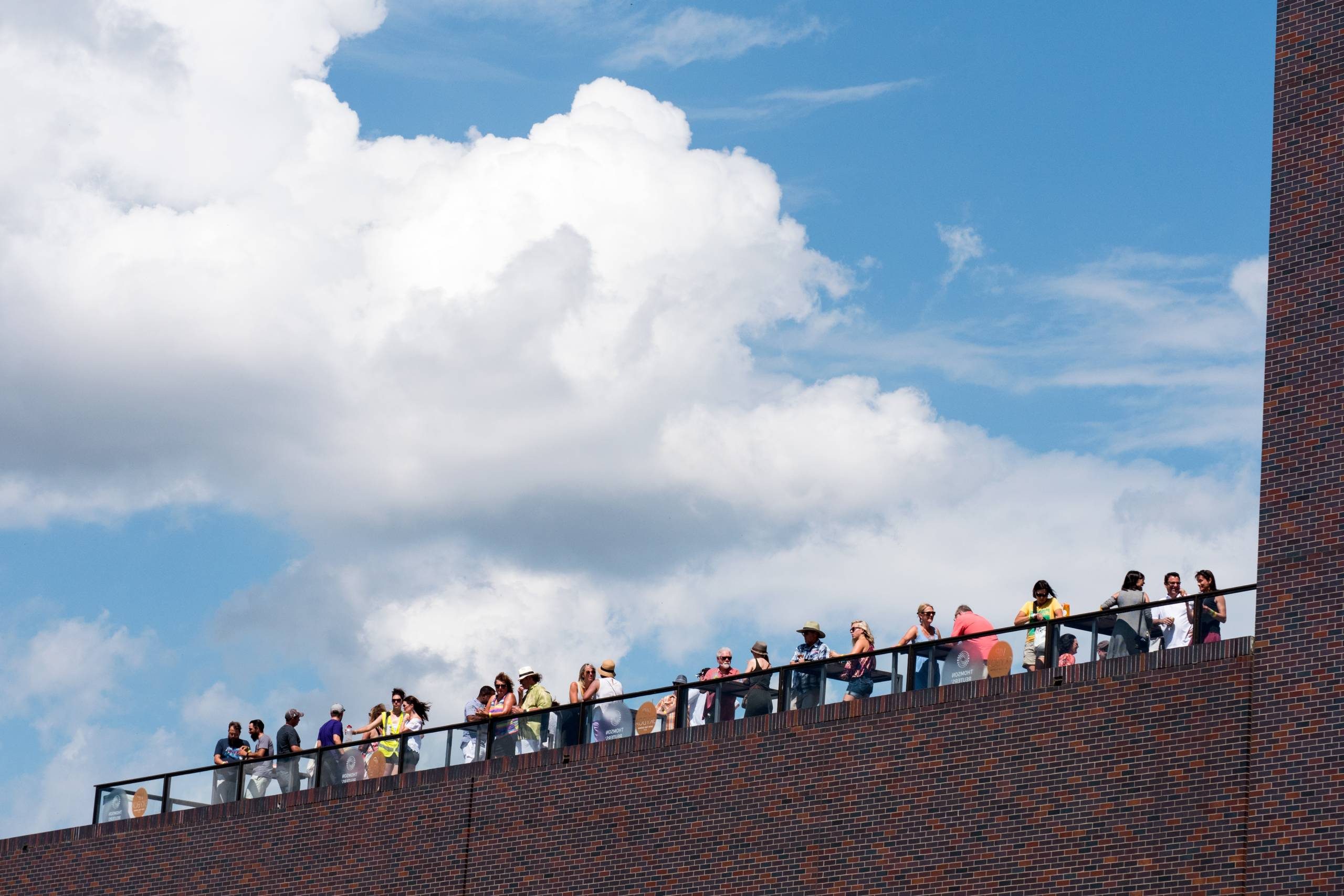
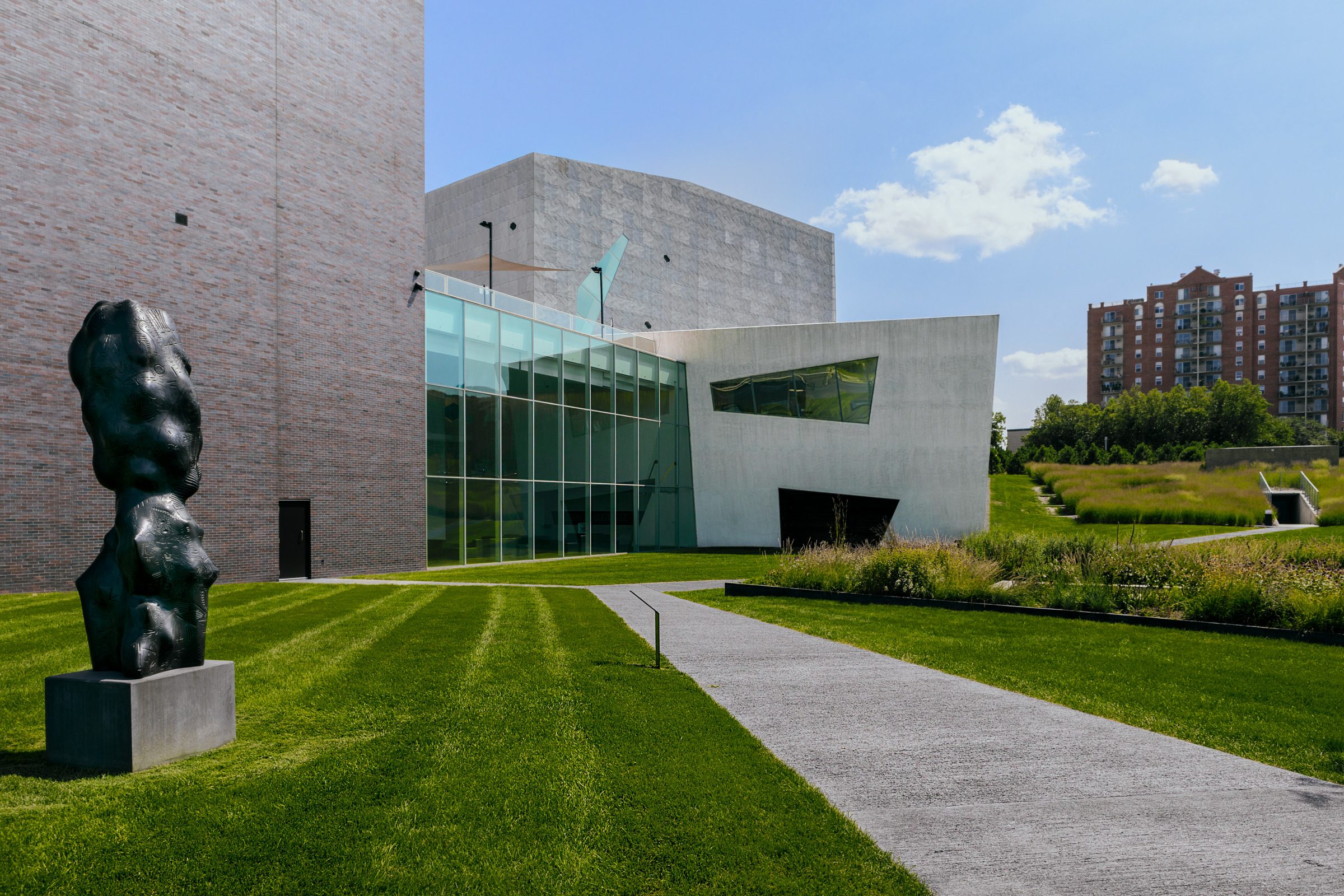
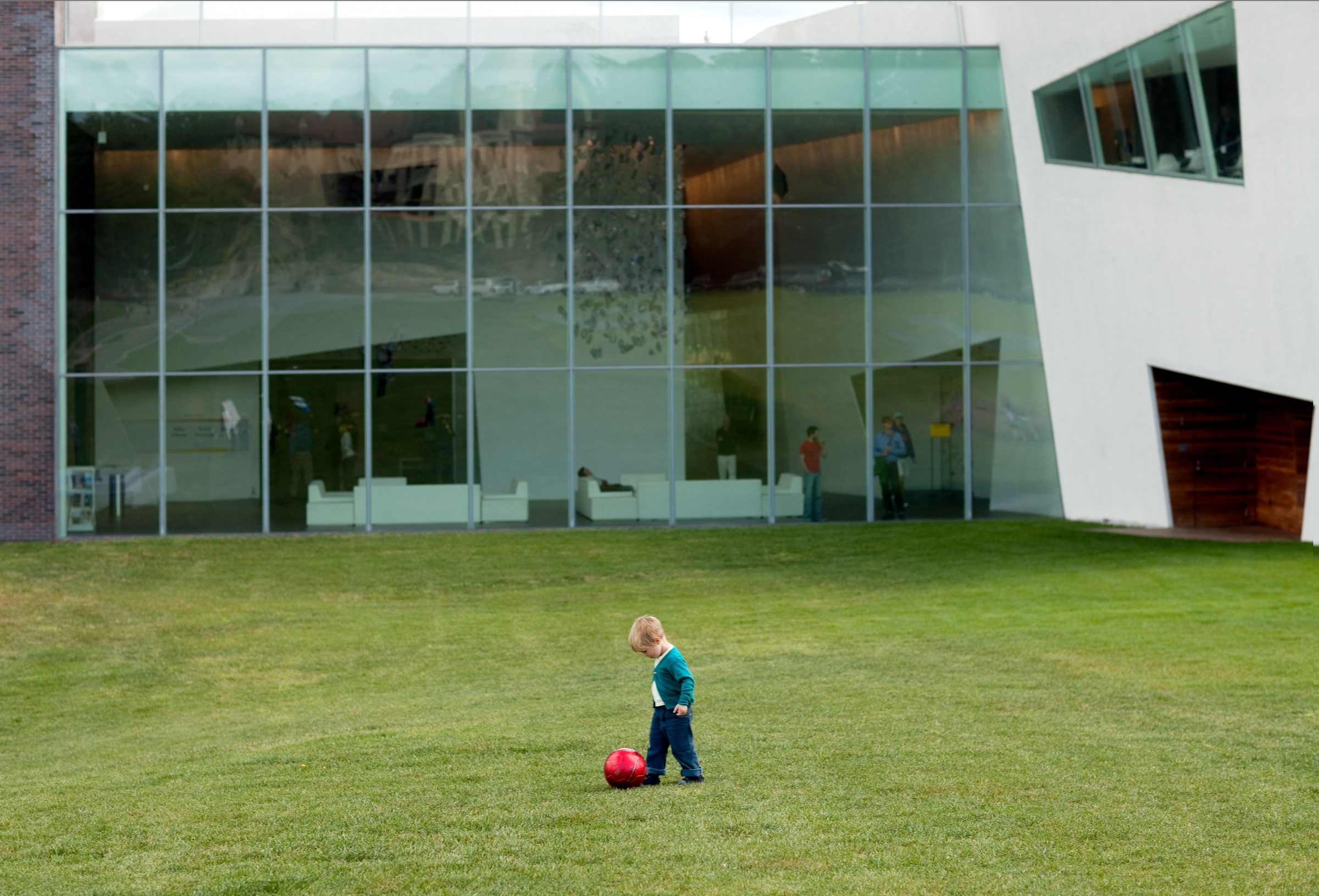
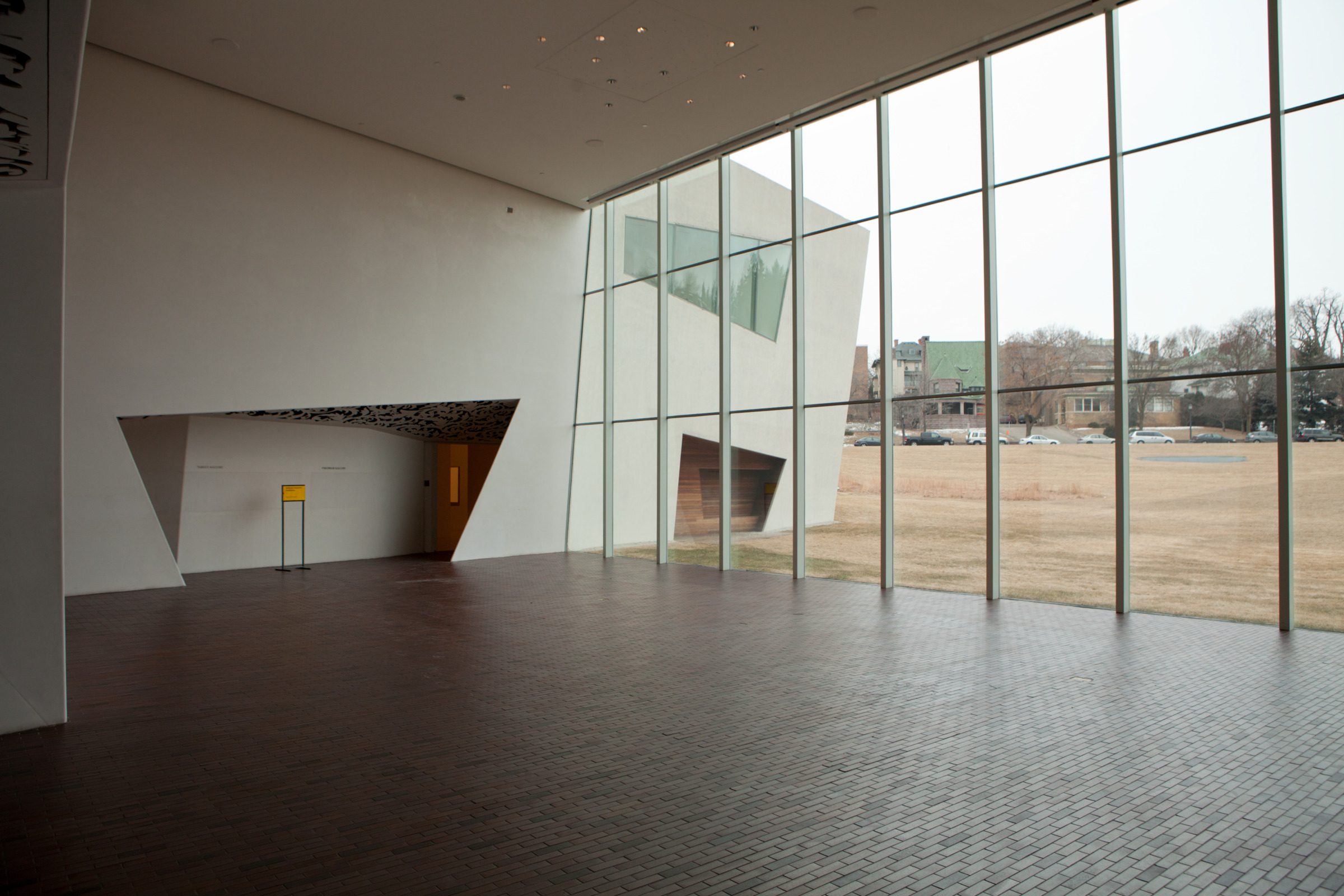
Connecting to the original Barnes structure is a two-story section that includes galleries and social spaces with offices above, as well as a rooftop terrace overlooking Hennepin Avenue. Another lounge follows the slope of Hennepin Avenue, one of Minneapolis’ busiest thoroughfares. Its double-glass curtain wall places visitors in movement parallel to the urban flow. The overall scheme weaves together existing and new spaces with echoes of Barnes’ design throughout. The Cargill Lounge, with its 26-foot-high floor-to-ceiling glass, provides a dramatic vista onto a four-acre greenspace that hosts special, seasonal outdoor events such as music concerts, film screenings, and artist residency projects and features a signature Skyspace, or sky-viewing chamber, by artist James Turrell.
Gallery