Interdisciplinary Initiative
What do we mean by the term interdisciplinary? At the Walker, an art center committed to showcasing the art of our time, this term describes our mission to follow the artists and to allow our program to embrace ways that many contemporary practitioners work, which since the 1960s has often meant loosening boundaries between artistic labels—painting, film, dance, performance—in favor of a more open and flexible view toward the art experience itself.
Building on this approach, the Walker’s multiyear Interdisciplinary Initiative, made possible by the Andrew W. Mellon Foundation, specifically supports the institution’s commitment to artists working at the intersection of the performing and visual arts, both making work and presenting it across gallery, stage, and public space. The initiative has also supported the Walker’s exploration of new approaches to the documentation, conservation, and acquisition of interdisciplinary artworks. As part of the initiative and evidenced on this website, the Walker has advanced scholarship and research; worked toward modeling new directions for curating, commissioning, developing, and presenting the work of interdisciplinary artists; continued efforts to strengthen the interpretation of interdisciplinary works in the museum’s collections; and charted new approaches to audience interface and engagement across platforms. Highlights of the program (2016–2020) include eight newly commissioned artworks or productions by a diverse range of artists, several of which were subsequently acquired for the Walker’s collection; a series of dynamic online publishing projects, including two new volumes of the Living Collections Catalogue and the production of a series of new video documents showcasing key interviews with participating artists.
The Walker’s world-renowned collections feature generations of artists whose works expand the possibilities of art through the merging of disciplines, while its program has continued to redefine genres through the commissioning and presentation of new projects. The Walker’s long history with such innovators as Joseph Beuys, Trisha Brown, Merce Cunningham, Cynthia Hopkins, Ralph Lemon, Sarah Michelson, and Adrian Piper, among many others, make it an ideal institution to forge new platforms and build a shared vocabulary and responsibility in response to the evolving practices of today’s artists.
Three crucial and interrelated areas of work, focusing specifically on the intersection of performing and visual arts, are included in Interdisciplinary Initiative:
Three Areas of Focus

Designed to broaden and deepen institutional understanding and capabilities, the research initiative involves circles of curators and key scholars who help the Walker develop skills to better serve a national field going forward. Emerging curators receive training working with interdisciplinary artists and art forms and also travel to conduct research. Engaging colleagues in the field at large has been critical to the initiative, which was envisioned as a multilayered approach. Participants bringing a diversity of voices, backgrounds, areas of expertise, and perspectives have helped to guide and inform the process, including Adrienne Edwards, senior advisor and curator at large (currently Engell Speyer Family Curator at the Whitney Museum of American Art, New York); Walker interdisciplinary fellows Simone Austin, Danielle Jackson, Gwyneth Shanks, and Allie Tepper; a four-person Think Tank comprising Charles Helm (former director of performing arts at the Wexner Center for the Arts, Columbus, Ohio), Judy Hussie-Taylor (executive director and chief curator of Danspace Project, New York), Jill Sterrett (deputy director, Smart Museum of Art, University of Chicago), and Lydia Yee (chief curator, Whitechapel Gallery, London); and others.
Enhancing the ability to support artists working in the interdisciplinary realm is a key focus area of the initiative. Artists primarily trained in visual or media arts are increasingly interested in acquiring enhanced theatrical, design, development, and presentation skills to advance their work and practice. Similarly, artists with dance, theatrical, and performance art backgrounds are interested in developing work for gallery conditions and settings or in collaboration with visual artists. Over the arc of the initiative, the Walker has produced commissions and projects that move freely between galleries, stage, and public spaces, supporting artists’ visions in the making of new interdisciplinary works. Projects realized within the initiative include pieces by artists Faye Driscoll, Theaster Gates, Maria Hassabi, Jason Moran, Rabih Mroué, Laure Prouvost, and Meg Stuart as well as the event Resonance: A Sound Art Marathon, featuring Tarek Atoui, Heather Barringer, Philip Blackburn, Jules Gimbrone, Walter Kitundu, Haroon Mirza, Mankwe Ndosi, Camille Norment, Matana Roberts, Christine Sun Kim, Craig Taborn, and Preston Wright.
Investigating how and when to apply museum-quality standards to the burgeoning field of presenting, commissioning, and acquiring interdisciplinary works and the artists who make them is an essential aspect of the Interdisciplinary Initiative. Such works may require uniquely developed forms of production, documentation, preservation, archiving, and collecting. Advancements in creating new models or ways of working in this area were made by taking an in-depth look back at selected works from the Walker’s collection and artist residency/commissioning history to reflect on their resonance for contemporary practice today. This research will be shared through the Walker Collections website and two new volumes of the Living Collections Catalogue, an innovative series of online scholarly publications.
Commissions & Presentations
Over the arc of the Interdisciplinary Initiative, the Walker has commissioned, produced, and presented eight new commissions and artist projects sited across galleries, stage, and public spaces.

Performance in Galleries & Public Spaces
Acquisition
February 2017
Since the early 2000s, New York–based artist and choreographer Maria Hassabi (b. Cyprus, 1973) has developed a distinct choreographic practice involved with exploring the relationship of body to image and defined by sculptural physicality and extended duration.
For the premiere of her commissioned work STAGING (2017; February 8–14, 2017), eight dancers performed continuously during gallery hours in public spaces and within the galleries of the Walker-organized exhibition Merce Cunningham: Common Time (February 8–July 30, 2017). The performers’ presence in these locations formed a sculptural movement installation that unfolded as a progression of highly formal choreographies composed of stillness and decelerated movements. As part of this durational dance piece, Hassabi realized a two-part installation titled Lighting Wall #1 and Lighting Wall #2. Situated at the entrances of two different galleries and physically removed from the dancers, the shifting lights reflected the spatial and temporal configurations of the choreography in performance.
A component of the larger STAGING production, Hassabi’s STAGING: solo (2017)—a live installation performed by a single dancer—was subsequently acquired by the Walker for the collection. Oscillating between dance and sculpture, subject and object, live body and still image, the work tests conventional forms of viewership and of museum collecting practices. Developed in close collaboration with the artist, the acquisition not only ensures the integrity of Hassabi’s choreographic voice but also establishes a plan for future training of the work’s performers by the artist and a group of her trusted collaborators. In addition to the live dance, Hassabi also conceived archival and sculptural iterations of the work, which can be exhibited independently of the performed piece.

Video Score
April 2017
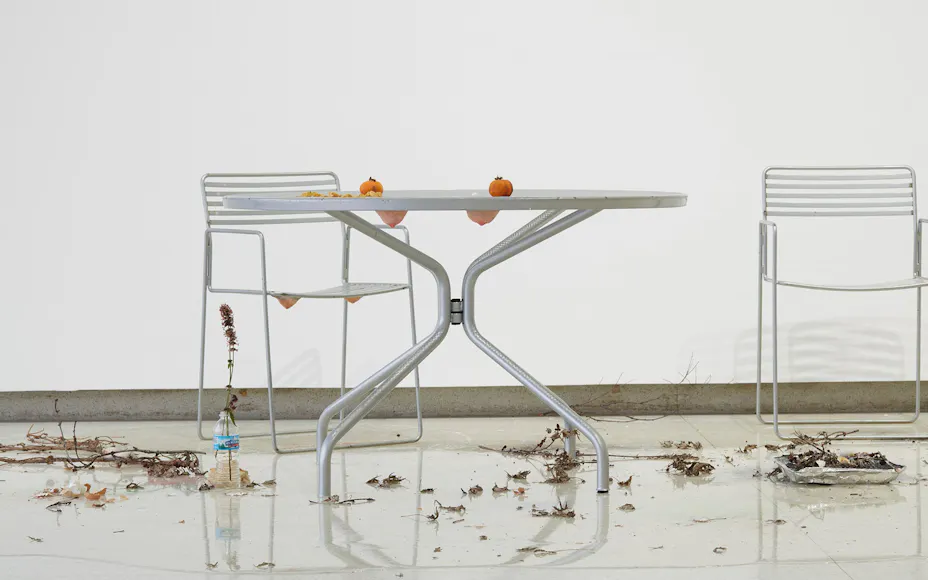
An artist known for conserving, collecting, recycling, or reclaiming materials and objects in his work, Theaster Gates (US, b. 1973) continued his investigations around questions of life and death, creation and destruction with Lumber Song (2017), a new moving image piece commissioned by the Walker. In April 2017, the Chicago-based artist created a video score in Loring Park, a site located across the street from the Walker and the Minneapolis Sculpture Garden with a long history of hosting performative artworks and events.
Working closely with the Minneapolis Park & Recreation Board, the artist identified a diseased ash tree that had been marked for removal. For the performance, Gates felled the tree with an axe, while his collaborator Ben LaMar Gay (from the experimental ensemble Black Monks of Mississippi) played the trumpet in a musical eulogy. A procession followed, during which the artists crossed the Irene Hixon Whitney Bridge to return to the Walker campus, the home of Gates’s Walker-commissioned outdoor sculpture Black Vessel for a Saint (2017). Emphasizing the transition from one performance space to another, the project underscored the shared history between the city’s parks and its cultural life and influenced a number of the artist’s later works, including Dance of Malaga (2019). The moving image work will be on view in the Bentson Mediatheque during the run of the Walker exhibition Theaster Gates: Assembly Hall (September 5, 2019–January 12, 2020).
Exhibition
Stage Performance
Acquisition
Fall/Winter 2017–2018
The multilayered, two-part project Laure Prouvost: They Are Waiting for You was composed of a new installation presented in the gallery (October 12, 2017–February 11, 2018) and a theatrical performance work, co-commissioned and coproduced by the Walker and EMPAC, Troy, New York (February 9–10, 2018). For the gallery installation, conceptual artist Laure Prouvost (France, b. 1978) combined a new moving image work with painting, sculpture, and found objects, which were arranged in a “waiting room” outside a central video space. The resulting environment, interspersed with spoken and written instructions, drew visitors into a space of shifting terrain that conflated reality with fiction and art with everyday life.
The theatrical performance, also titled They Are Waiting for You (2018), drew on similar thematic elements. Conceived as Prouvost’s first major production for the stage, the show unfolded with complex and humorous stories in which fact and fiction were interwoven, challenging conventions on how we shape our life histories. The result was an experimental mash-up of video work, dance, immersive stage décor, and choral music. For this project Prouvost was joined by artist Sam Belinfante, dance artist and choreographer Pierre Droulers, percussionist Eli Keszler, and additional musicians and performers from Minnesota and New York. Following the exhibition and performance, the Walker acquired DIT LEARN (2017)—the video work that anchored both gallery and stage projects—for the collection.
Exhibition
Exhibition Catalogue
Gallery Performance Series
Stage Performance
Digital Publication
Acquisition
Spring/Summer 2018
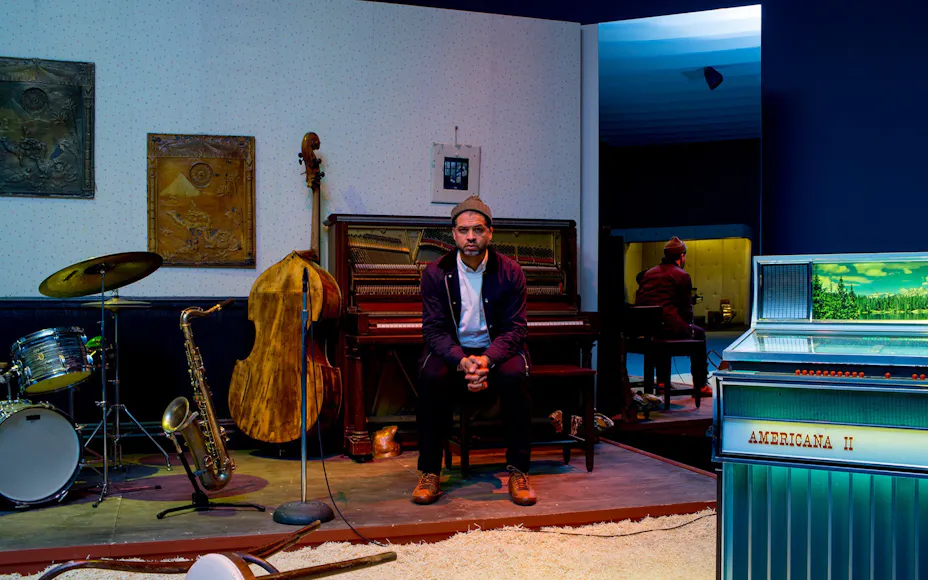
A focus on the work of the jazz pianist, composer, and interdisciplinary artist Jason Moran (US, b. 1975) led to a multipart presentation that included commissions, an exhibition with a national tour and catalogue, a series of concerts, a large-scale performance premiere, and support for the artist’s new digital publication on jazz culture. Moran’s experimental approach to art-making embraces the intersections of objects and sound, pushing beyond the traditional staged concert or sculpture and drawing to amplify ways that both are inherently theatrical. The Walker-organized Jason Moran, the artist’s first museum exhibition (April 26–August 26, 2018), featured the range of work Moran has explored, his collaborations with visual artists (including Stan Douglas, Theaster Gates, Joan Jonas, Adrian Piper, and Kara Walker), and his “set” sculptures—homages to iconic jazz venues from the 1920s to the 1970s that also double as stages, or sets, for concerts.
A series of in-gallery performances were presented during the run of the show within Moran’s STAGED: Slugs’ Saloon (2018), a sculptural installation that memorializes the iconic New York jazz club Slugs’ Saloon (operating from 1964–1972). Acquired for the Walker’s collection, the work will continue to be used as a stage for concerts, with musicians invited to perform at the artist’s discretion during his lifetime and afterward, according to determined guidelines. In conjunction with the exhibition, The Last Jazz Fest premiered in the Walker’s McGuire Theater, featuring Moran and his trio the Bandwagon, Taurus Mateen and Nasheet Waits; visual artists Ryan Trecartin and Lizzie Fitch; and Ashland Mines (DJ Total Freedom) (May 18–19, 2018). The Walker-commissioned performance examined various ways that jazz functions—as freedom music, as a model for democracy, and as a prop—while championing Moran’s collaborative impulse. In addition, the inaugural issue of Moran’s music publication LOOP (2016) is now hosted in digital form on the Walker Reader, in cooperation with the artist and Luhring Augustine. The magazine looks at jazz culture from an African American perspective, featuring the voices of the artist, his friends, family, and his many collaborators.
Stage Performance
Lecture-Performance
Installation
January 2019
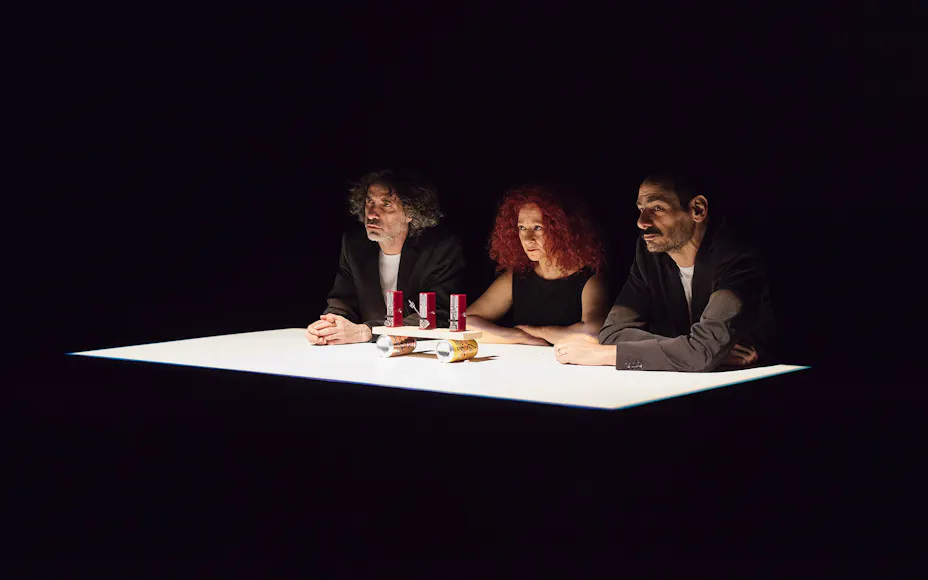
Through projects spanning the disciplines of theater, performance, music, and visual art, Rabih Mroué (Lebanon, b. 1967) engages with the contemporary politics of the Middle East and the enmeshed history of discord in the region, often drawing from his personal experience of the Lebanese Civil War (1975–1990). Taking many forms, his work often interweaves history, testimony, and storytelling to destabilize facts and fictions. A triptych of projects—the world premiere of the theater work Borborygmus, a gallery installation of new work, and a lecture-performance—were realized by Mroué and presented as part of or in tandem with the Walker’s Out There series (January 2019).
In Borborygmus, a Walker-commissioned dramatic-comic theater piece by Mroué and collaborators Mazen Kerbaj and Lina Majdalanie, the performers’ identities and judgements of one another shift as the taboos, fears, and failures of their lives and countries are laid bare (January 11–12, 2019). Mroué also presented Sand in the Eyes, a lecture-performance on the image politics of Islamist recruiting videos, contrasted with imagery shot by US drones. The gallery presentation Again we are defeated (December 20, 2018–March 1, 2020) highlights Mroué’s latest cycle of artworks, including drawings, collages, and videos, in which the Berlin-based artist considers the repeated cycles of violence affecting people of the Middle East by examining his own encounters with the conflict as mediated through the news. As the artist serially tracks the recurring impressions of conflict, the works form an homage to the phantom presence of the dead.
Stage Performance
Installation
April 2019
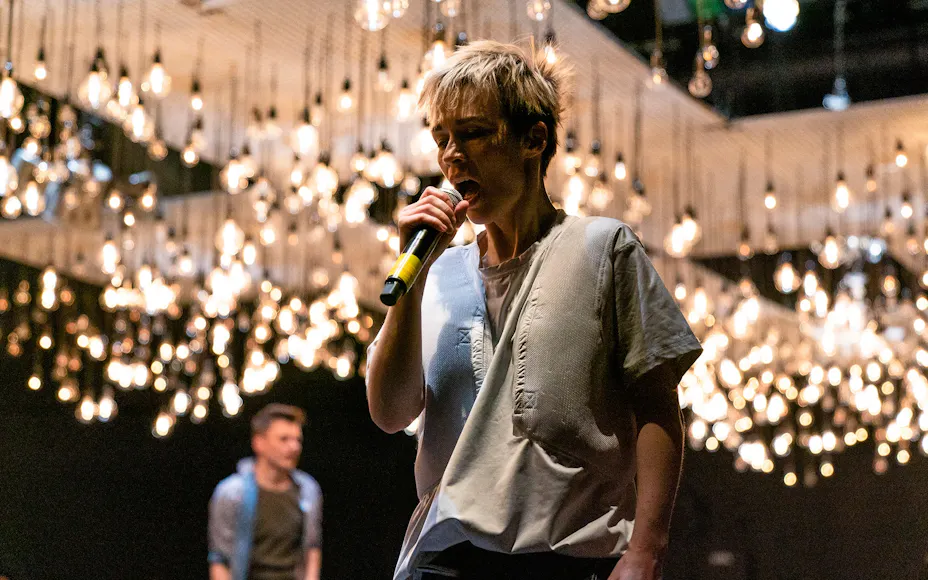
One of the world’s most influential and acclaimed contemporary choreographers, Meg Stuart (US, b. 1965) continually invents new presentation contexts and movement languages in collaboration with artists from diverse disciplines. The Berlin/Brussels-based artist’s multipart Walker engagement included An evening of solos and duets (April 5–6, 2019) and the North American premiere of the Walker co-commissioned installation/performance Celestial Sorrow (April 11–13, 2019).
With a focus on the body as a vulnerable, uncertain presence, Stuart and her company Damaged Goods reconfigured 30 years of evocative dance in An evening of solos and duets, a presentation that encapsulates their profound influence on contemporary performance. The work revisited both the past and the present, giving a unique look into an oeuvre that continues to grow and transform. In Celestial Sorrow—an immersive installation made with celebrated Indonesian visual artist, theater maker, and musician Jompet Kuswidananto—Stuart (Indonesia, b. 1976)— creates a vibrant world of light, movement, and music inhabited by three performers and two musicians. Possession, implanted fictional traumas, imaginary and invisible spaces, and the voices that make them resonate became starting points for an adventurous leap into unknown territories.

Performances and Installations
May 2019
The Walker has been producing, presenting, and commissioning sound art performances and installations for more than 50 years, encouraging artists working between visual and performing arts to experiment with new modes of expression. Celebrating interdisciplinary experimentation, Resonance: A Sound Art Marathon (May 18, 2019) was inspired by the Walker’s 1980 New Music America festival and the trajectory of jazz experimentation at the museum over the decades.
Layering and interweaving the visual (instruments, sculpture) and the aural (sonic landscapes, jazz, found sound), the 10-hour marathon featured an international group of artists—Tarek Atoui, Heather Barringer, Philip Blackburn, Jules Gimbrone, Walter Kitundu, Haroon Mirza, Mankwe Ndosi, Camille Norment, Matana Roberts, Christine Sun Kim, Craig Taborn, and Preston Wright—who played in auditory and visual accord with the audience, while exploring the resonances between visual art and sound performance. Though the event was to be held outdoors in the Minneapolis Sculpture Garden’s Cowles Pavilion, projects were relocated and presented in the Walker’s McGuire Theater and Cargill Lounge due to adverse weather conditions. The immersive, experimental performances and structures of Resonance: A Sound Art Marathon created a world all their own, one bound by time and space, built and destroyed in just one day.

Stage Performance
Exhibition
Online Experience
February 2020
One of dance’s most distinctive experimental voices, choreographer/director Faye Driscoll (US, b. 1975) completes her Walker-commissioned trilogy Thank You For Coming with a powerful new project that bridges gallery and stage. Driscoll’s work poses performance as one of the last secular social spaces, where the vulnerability, necessity, and complexity of our interconnection can be made palpable. Her projects employ heightened modes of performativity, reformulations of proximity, and at times direct physical connection to reveal what she describes as “the palindromic loop between self and other.” Sets are designed to break apart; musical scores are made from the performers’ stomps and voices; props are worn, used, and reused.
Thank You For Coming: Attendance (2014), the first part of Driscoll’s trilogy, softened the lines between spectator and participant by deftly morphing audiences and performers into an impromptu 75-minute community. The second work, Thank You For Coming: Play (2016), focused on the consumption and fabrication of narrative as a way to make our lives cohere, examining the lingering gaps and glitches (both physically and vocally) between what we say and what we do. The Walker presented Attendance in 2016 and co-commissioned and presented Play to Walker audiences in 2017.
Driscoll’s new piece Thank You For Coming: Space (2019) unfolds with a moving requiem on art, the body, and loss. Performed in a unique installation setting on the McGuire Theater stage, Space is informed by art-historical imagery and emerges as a collaborative creation between the artist, her astute design collaborators, and the audience.
In conjunction with the new performance work, Driscoll extended the conceptual underpinnings of her trilogy to the Walker’s gallery Gallery 7. Faye Driscoll: Come On In, the artist’s first gallery installation, presented an environment that invited us each to become active participants. Following closure due to COVID-19, Driscoll reimagined part of the exhibition as an online experience, to be viewed from the comfort of your home.
Essays on the interdisciplinary

Sites of Invention: 13 Interdisciplinary Exhibitions at the Walker

Momentary Arrest: Collecting Interdisciplinary Artworks

From the Modern to the Global Museum: Collecting Interdisciplinary and Non-Object-Based Art

The Problem of Time (Or, How to Exhibit Immaterial Art?)

Choreographing Interdisciplinarity: Efficiency and Failure

In the Midst: Interdisciplinary Art and the Walker Art Center
Living Collections Catalogue

From left: Douglas Dunn, Nancy Lewis, and David Gordon, members of Grand Union performing at the Guthrie Theater as part of the Grand Union residency at the Walker Art Center, October 5, 1975. Walker Art Center Archives.
Supported by the Walker’s Interdisciplinary Initiative and the Andrew W. Mellon Foundation, two new Living Collections Catalogue volumes were published: Volume III on 1960s–70s performance-based collectives and radical experimentation, and Volume IV on Black avant-garde and experimental jazz from the 1960s to the present.