Walker Art Center Teen Arts Council at 30
By Jill Vuchetich

It’s hard to believe that the Walker Art Center’s Teen Arts Council (WACTAC) is thirty! But after all these years, teens still rule WACTAC. A special afternoon of art-making, reflection, and community dialogue on August 15 caps off a year of events, activities, and celebrations.
Started in 1996, WACTAC was one of the first programs of its kind. While museum educators had offered children’s programming for decades, opportunities specifically for teenagers were scarce.

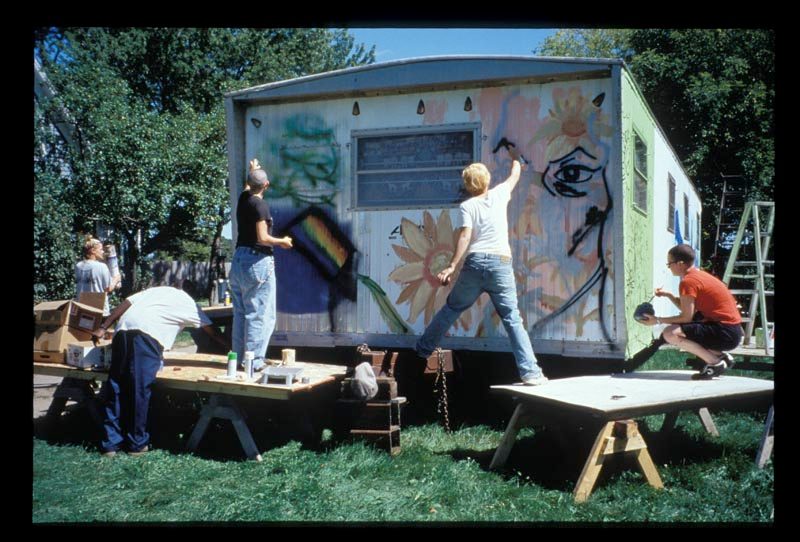
Walker-Bryant Art Workshop, Bryant Junior High, Minneapolis, 1968. Photo: Eric Sutherland for Walker Art Center.

Walker-Bryant Art Workshop, Bryant Junior High School, Minneapolis, 1968. Photo: Eric Sutherland for Walker Art Center.
A notable early example was the Walker-Bryant Art Workshop, a Minnesota State Arts Council–funded experiment that ran from 1967 to 1969 at Bryant Junior High School, now Sabathani Community Center, in South Minneapolis. Visiting artists like Robert Israel and Richard Randall worked with local arts educators to develop studio sessions for local high school students. Participants learned how to shape metal and various other materials or to create body casts like artist George Segal.
The 1970s and 1980s witnessed a shift in focus to art activities for elementary school students and the creation of the Walker’s Art Lab, complete with child-sized tables, chairs, and sinks. In the early 1990s, however, an energy around youth culture and reaching teens sparked new programs not just at the Walker but across the country; precedents for WACTAC included the Center for Contemporary Arts’ Teen Project in Santa Fe, New Mexico, and artist Tim Rollins’s Art and Knowledge Workshop in New York. When Kathy Halbreich became director of the Walker in 1991, she saw an opportunity. “As a teen, my love of art opened my eyes to a larger world, one in which it was possible to imagine how I might live or think differently,” she wrote in a 2004 brochure. “My hope for teens who involve themselves with the Walker is that they come to know the rewards of thinking critically.”
Between 1992 and 1994, the Walker convened an Adolescent Think Tank in collaboration with community partners, including the Minneapolis Park & Recreation Board, Minneapolis Public Schools, the University of Minnesota, and Twin Cities Public Television. After a series of guest presentations, the Adolescent Think Tank assembled thirteen focus groups of area teens to discuss ideas for programming. Insights from these conversations, combined with support from a 1994 New Audiences/New Definitions grant from the Lila Wallace Reader’s Digest Foundation, laid the foundation for a dedicated Teen Programs unit at the Walker. Among its members was artist and community advocate Seitu Jones, who would play an integral role in the eventual launch of WACTAC.

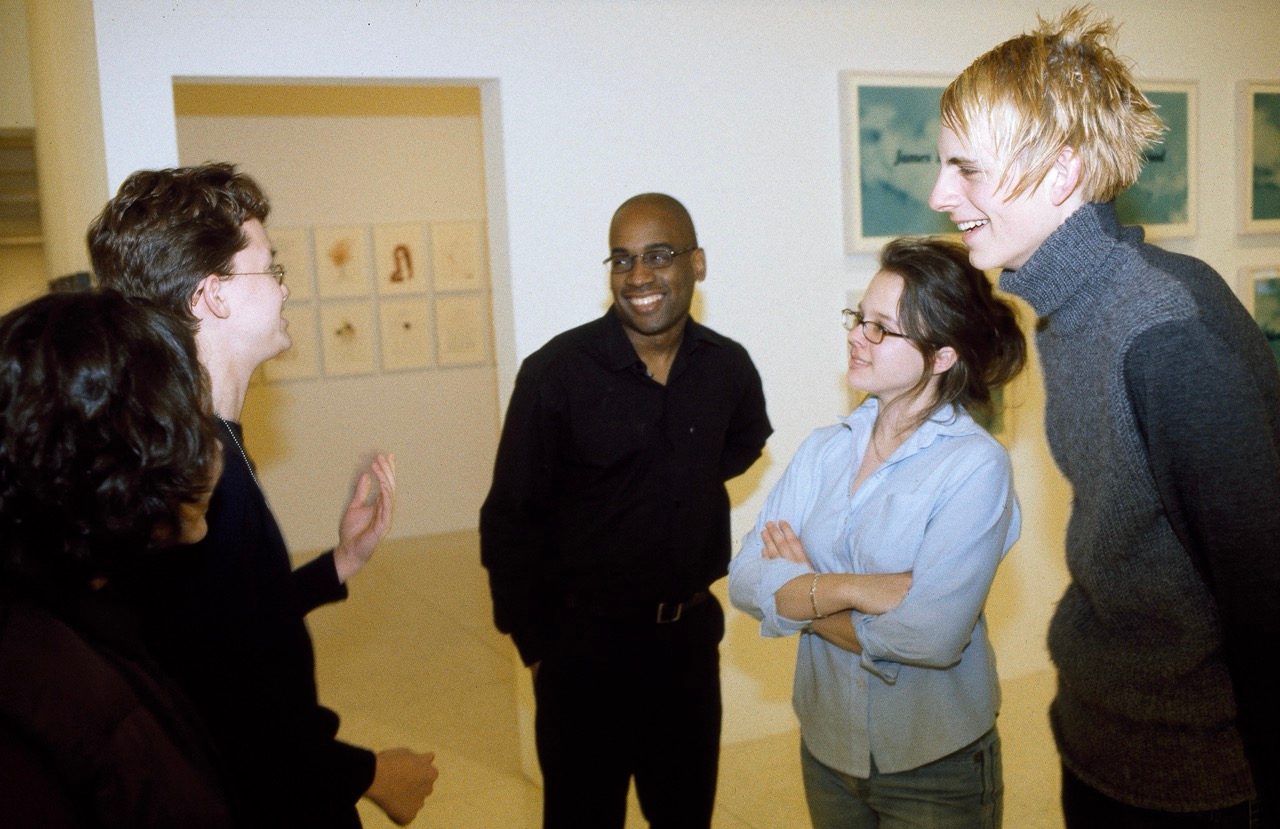
Dawoud Bey (center) with WACTAC members and Teen Programs Coordinator Michelle Coffey (standing right), Walker Art Center, 1995. Courtesy Walker Art Center Archives.
Dawoud Bey’s artist residency in 1995 was an early success. Fourteen area teens worked with Bey to create new large-format photographic portraits using a Polaroid 20-by-24-inch camera.

Members of the first Walker Art Center Teen Arts Council, 1996. Michelle Coffey, teen programs director (top row, right), Christi Atkinson, teen arts council coordinator (center row, right). Courtesy Walker Art Center Archives.
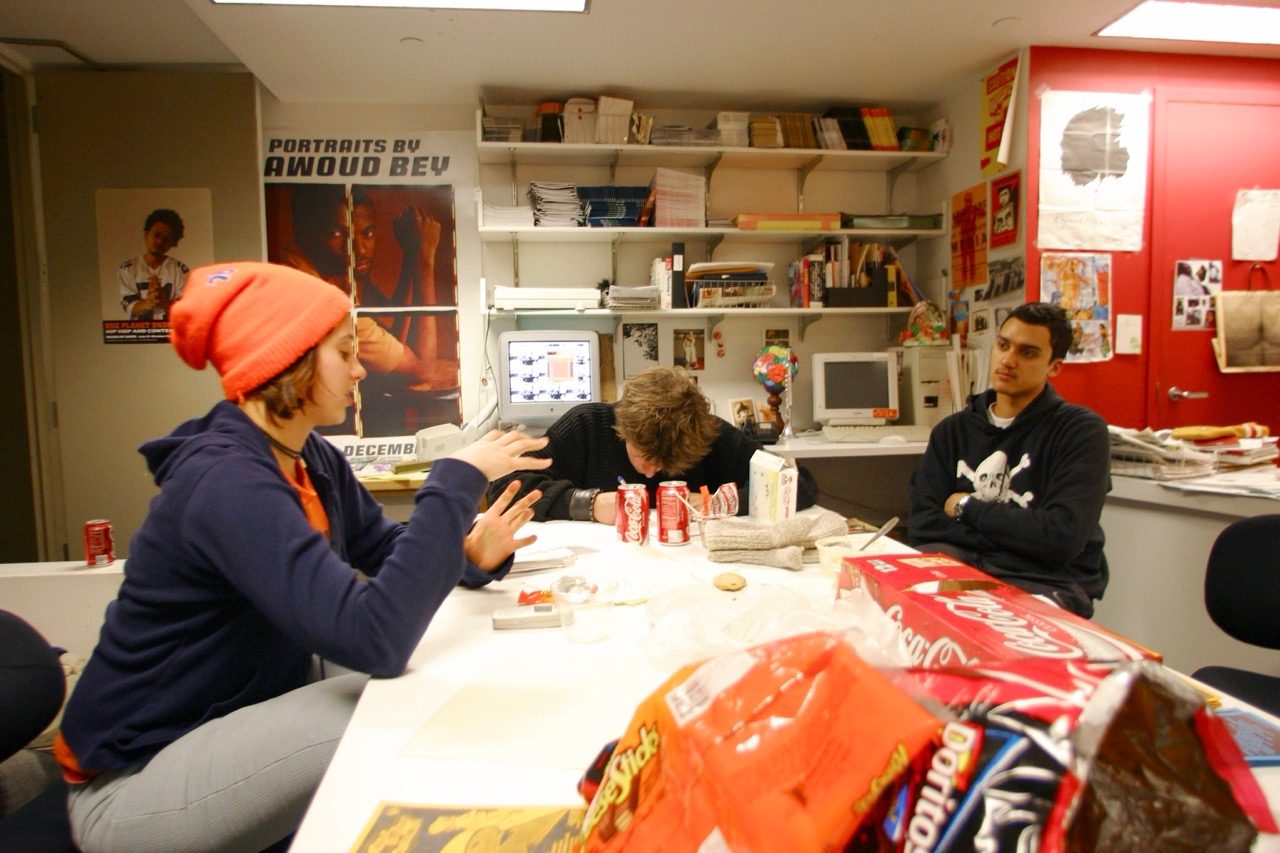
Shortly after Bey’s residency, the Walker recruited area teens to participate in the very first Teen Arts Council. Since 1996, this group of generally a dozen teens meets weekly during the school year and helps plan major events, including the annual Teen Takeover. In return, the teens receive a stipend for their year of service, a transportation allowance, and a badge that allows them access to the building just like any other member of the Walker’s staff. The time commitment is huge, and by necessity WACTAC members develop organizational and time management skills to balance their work at the Walker alongside academics, other extracurriculars, family, and work. As a WACTAC alumnus (and now Walker staff member) recently remarked, “It’s not just eating snacks.”

WACTAC meeting, Teen Lounge, 2010. Photo: Cameron Wittig for Walker Art Center
The principle that teens shape the direction and focus of the council has remained constant through its decades of successes and growing pains. For example, the teens requested that the meetings take place weekly instead of monthly as was originally set up. And early on the council attended many Walker staff meetings to learn how a museum is run, which, in turn, helped the teens to devise their own peer programming. From inviting artists to promoting events and party planning—WACTAC does it all.

Artists and WACTAC members installing Hot Art Injection, The Soap Factory, Minneapolis, 1997. Photo: Dan Dennehy for Walker Art Center.
In 1996, WACTAC was keen on presenting teen art. Working with Teen Arts Coordinator Christi Atkinson and the Soap Factory, a gallery in southeast Minneapolis, they created the series Hot Art Injection, a juried show for and by teens that was presented biannually for several years.

Breakdance performance by the hip-hop arts collective Nubia during the opening of One Planet Under a Groove: Hip Hop and Contemporary Art, July 12, 2002. Courtesy Walker Art Center.
The teens proved to be excellent planners. In 2002, WACTAC organized a memorable exhibition preview party for One Planet Under a Groove: Hip Hop and Contemporary Art. With performances by arts collective Nubia and other hip-hop artists, the opening recorded the highest attendance for a preview party up to that point.

Walker Art Center Teen Arts Council Student Open House: Get Scrappy, October 27, 2011. Photo: Cameron Wittig for Walker Art Center.

Open mic performance as part of Teen Arts Council Student Open House: It’s Complicated, October 23, 2014. Photo: Courtney Perry for Walker Art Center.
Over the years, WACTAC has strengthened its focus on teen art programming. Starting in 1998, WACTAC began organizing Student Open House, a twice-yearly evening of music, dance, spoken word, and art activities originally staged as part of the Walker’s Free Thursday Nights. In 2013, the program evolved into Teen Takeover, a night of exclusive teen access to the entire museum. IDs are checked for entry; those over nineteen are not allowed in.

Teen Takeover, May 24, 2019. Photo: Awa Mally for Walker Art Center.
In addition to organizing large-scale events like Teen Takeover, WACTAC also participates in artist residencies, workshops, and talks hosted by the Walker. A few of the memorable residencies involved artists Barry McGee, Glenn Ligon, Robin Rhode, and Seitu Jones and Ta-coumba T. Aiken.
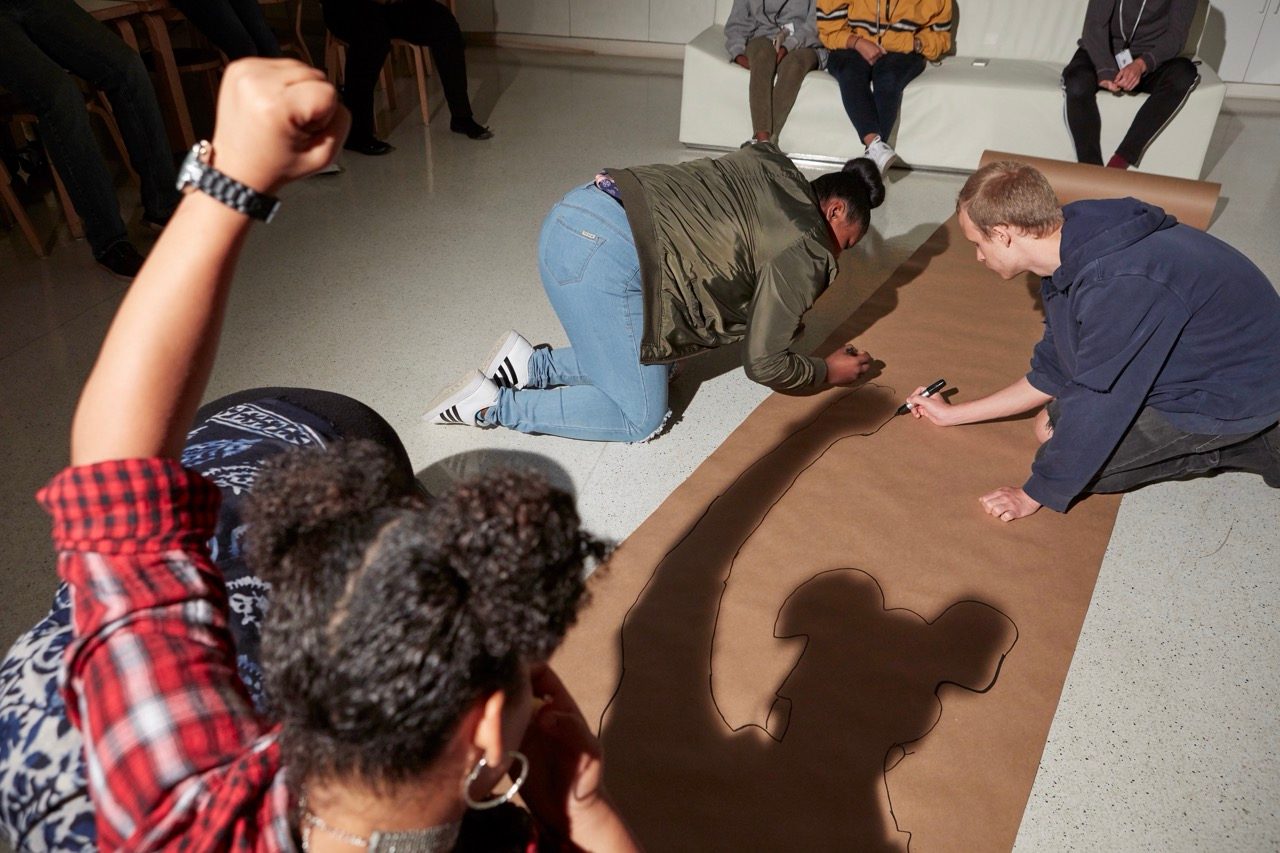
For example, teens collaborated with artist-in-residence Robin Rhode to create a series of performative action photographs that were displayed at bus stops throughout the metro during the 2003 exhibition How Latitudes Become Forms: Art in a Global Age.

Detail from a WACTAC collaboration with Robin Rhode, 2003. Courtesy Walker Art Center Archives.

Detail from a WACTAC collaboration with Robin Rhode, 2003. Courtesy Walker Art Center Archives.

Detail from a WACTAC collaboration with Robin Rhode, 2003. Courtesy Walker Art Center Archives.
The Walker’s Library & Archives holds a treasure trove of works by teens related to WACTAC’s numerous exhibitions, events, and workshops. Since 1997, members of WACTAC have produced their own promotional publications, buttons, stickers, tattoos, and more.

Sticker for Hot Art Injection, The Soap Factory, Minneapolis, 1999 Courtesy Walker Art Center Archives.
Over the years, zines became one of WACTAC’s most successful means of peer communication. Zines are handmade, self-published pamphlets or little magazines with a small print run distributed by their creators, providing a cheap, flexible way to express ideas or stories. Museums and libraries began collecting zines of all sorts—including science fiction fan zines, activist zines, and artist zines by the likes of Ed Ruscha and Dada creators—in the 1970s.
The Walker’s Library & Archives holds copies of the WACTAC zine series Fig. 12 and other Walker teen programs zines; a selection of these are on view through December 2026 in the Best Buy Aperture. Fig. 12 began in 1997 as a quarterly calendar of Walker events written by the teens of WACTAC and distributed to their peers; copies also included free passes to the Walker and information on how to apply to be part of WACTAC.

Fig. 12, issue 1, 1997. Courtesy Walker Art Center Archives.
Although print production is not what it once was, there is still something special about the touch and feel of tangible materials, especially in an era bombarded with digital media. (Of course, WACTAC has also embraced digital platforms and operates its own Instagram and other social media channels.)

Zine making at the Teen Arts Council Student Open House: Get Scrappy, October 27, 2011. Photo: Cameron Wittig for Walker Art Center.

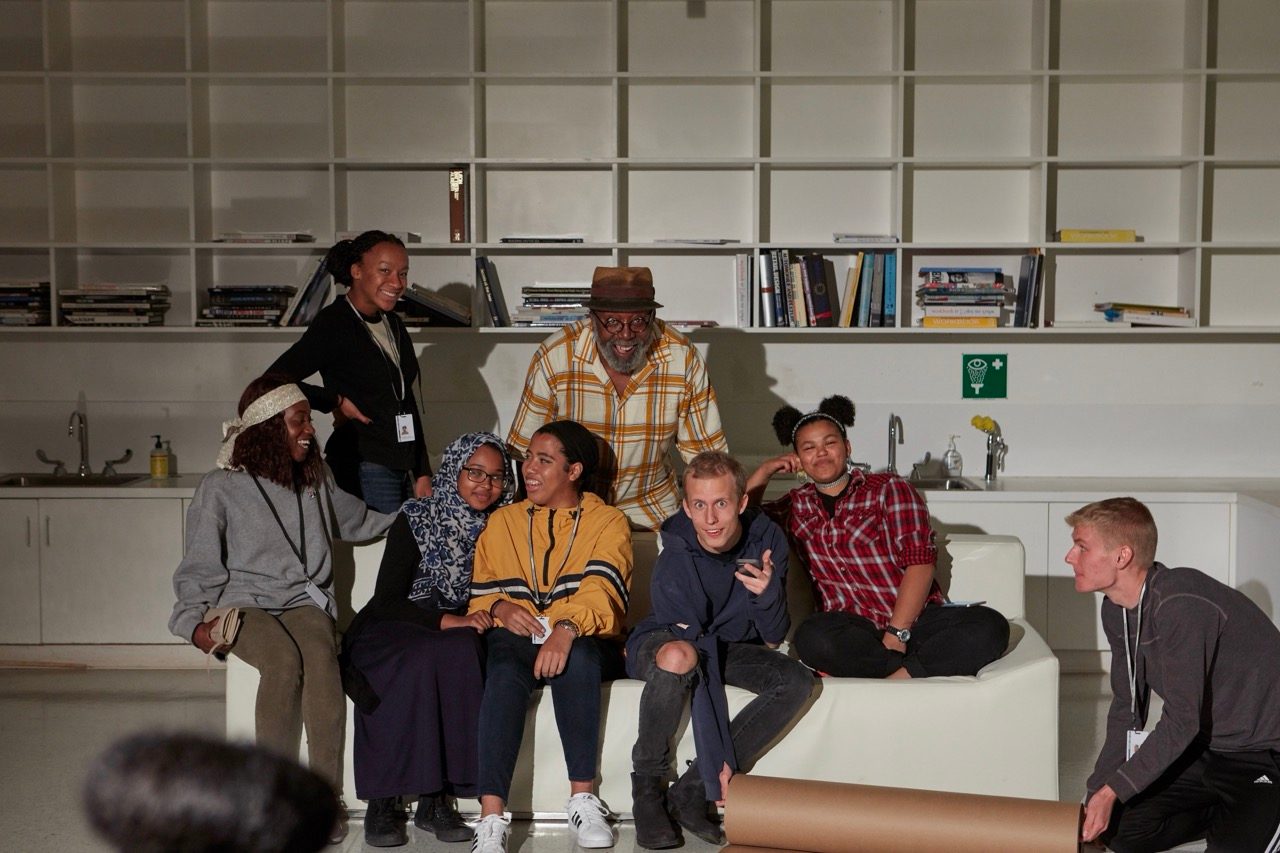
Walker Art Center Teen Arts Council reunion, March 13, 2026. Photo: Carina Lofgren, courtesy Walker Art Center.
Teen activities like Teen Takeover, artist talks, and residencies have become key components of the Walker’s programming throughout the year. While teen language, style, and interests may change, teens’ dedication to WACTAC and each other remains constant. As Youth Programs Coordinator Molly Yang recently said:
In working with WACTAC, I’ve learned that teens are mostly looking for spaces to feel safe enough to be themselves and express their ideas. For me, the strongest moments in WACTAC have been when the teens share updates in their lives or share their own art with the group. These moments give members the space to be seen and heard, while also opening opportunities to connect with other members beyond WACTAC.
